
Designer Danit Peleg has helped redefine what clothing can be and how it can be made. By combining fashion design with 3D printing technology, she has demonstrated that garments can be produced layer by layer using advanced materials such as polyurethane. Her work shows how polyurethane-based materials can extend beyond traditional industrial uses and play an important role in creative, wearable design.
Peleg gained international recognition for developing one of the first fully 3D-printed fashion collections created using desktop 3D printers. Instead of weaving or knitting fabric, she prints flexible, textile-like structures that are assembled into finished garments. Her approach supports a broader vision of fashion that is more accessible, customizable, and produced closer to the consumer.
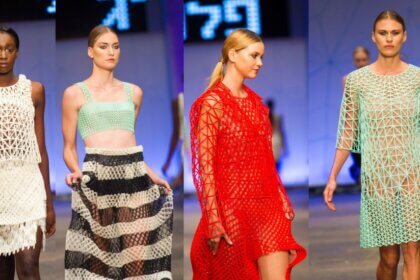
A key material in her work is thermoplastic polyurethane (TPU), a flexible form of polyurethane commonly used in additive manufacturing. TPU combines elasticity with durability, making it suitable for wearable applications. Garments must move with the body, and polyurethane provides the stretch and resilience needed for comfort. At the same time, it maintains strength even when printed in thin, intricate lattice structures. This balance between flexibility and structural integrity allows designers to create lightweight pieces that behave more like fabric than plastic.
Using fused deposition modeling (FDM) 3D printers, Peleg produces garments in modular sections. Rather than printing solid sheets, she designs repeating geometric patterns that interlock and flex. These engineered structures mimic the properties of textiles while maintaining shape and performance. Polyurethane’s ability to stretch and recover makes it particularly effective for this type of design, functioning both as a structural element and as a flexible surface.
In addition to innovation in design, Peleg has explored the potential of recycled TPU combined with textile waste, such as denim scraps, to develop new printable materials. These experiments reflect growing interest in circular production models within the fashion industry. While recycling blended materials presents technical challenges, such research highlights the potential of polyurethane-based materials to contribute to more resource-efficient systems.
Peleg’s work also points toward a broader shift in manufacturing. Digital design files can be adjusted for size and style before printing, enabling customization without the need for large inventories. Localized, on-demand production may reduce waste associated with overproduction and long supply chains. Polyurethane materials support this model because they are adaptable, durable, and compatible with additive manufacturing technologies.
Polyurethane has long been valued in sectors such as construction, automotive, footwear, and electronics for its versatility and performance. Through her pioneering work in 3D-printed fashion, Danit Peleg demonstrates that polyurethane also has a meaningful place in creative industries. By transforming flexible polyurethane filament into wearable garments, she illustrates how material science and design can come together to open new possibilities for innovation and sustainability in fashion.